
Firestopping isn’t just about filling holes; it’s about life safety, property protection, and rigorous compliance. For professional contractors, understanding firestop systems, their application, and the complex codes that govern them is absolutely non-negotiable. This FAQ addresses key considerations for ensuring safe, compliant, and effective firestop installations.
1. What is firestopping, and why is it so critical in commercial construction?
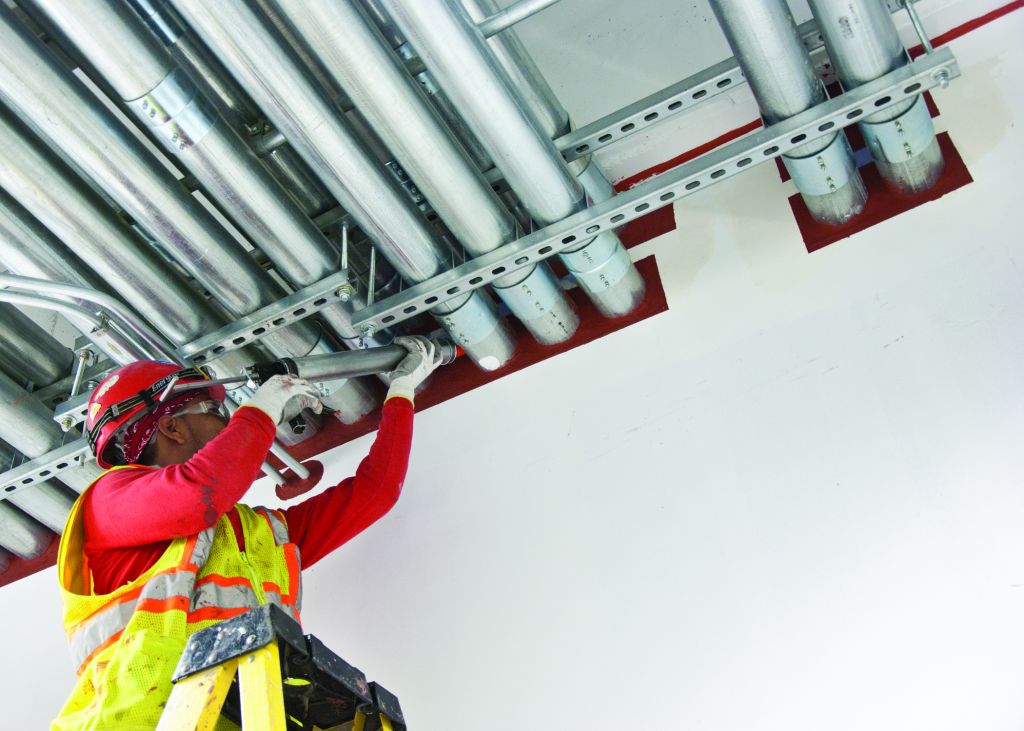
Firestopping is the process of sealing penetrations and gaps in fire-rated walls or floors to maintain their fire resistance ratings. When pipes, conduits, cables, or ductwork pass through these fire-rated assemblies, they create openings that could allow the rapid spread of fire, smoke, and toxic gases.
Firestopping is critical for several reasons:
- Life Safety: It compartmentalizes a building, slowing the spread of fire and smoke. This provides occupants more time to safely evacuate and allows emergency responders more time to act.
- Property Protection: By limiting fire spread, it minimizes damage to property and reduces potential financial losses.
- Code Compliance: It’s a non-negotiable requirement of building codes (e.g. NBCC, OBC, IBC or NFPA). Non-compliant firestopping can lead to project delays, failed inspections, costly rework, and significant legal liabilities.
- System Integrity: It restores the fire rating of the breached assembly, with a 3rd party tested firestop assembly, ensuring the entire passive fire protection system functions as designed.
2. What are the primary types of firestop products and their mechanisms, and how are they generally applied?
Firestop products come in various forms, utilizing different mechanisms to achieve their fire-resistive properties, and each is designed for specific applications and conditions:
- Sealants/Caulks: These are compounds applied into annular spaces around penetrating items or into linear gaps. They form a robust seal and can operate through several mechanisms:
- Intumescent: These sealants contain chemicals that expand and char when exposed to heat, creating an insulating barrier that seals the opening. They are often crucial for combustible penetrants (e.g., plastic pipes) as they can expand to fill the void left by melting materials.
- Elastomeric/Non-Intumescent: These sealants form a flexible, durable seal that resists the passage of fire, smoke, and hot gases primarily through their inherent fire resistance and integrity, without significant expansion. They are often used for non-combustible penetrants (e.g., metal pipes) or in dynamic joints where movement is expected.
- Endothermic: These sealants absorb heat and release chemically bound water vapor, which helps cool the fire-exposed surface and prevent heat transfer.
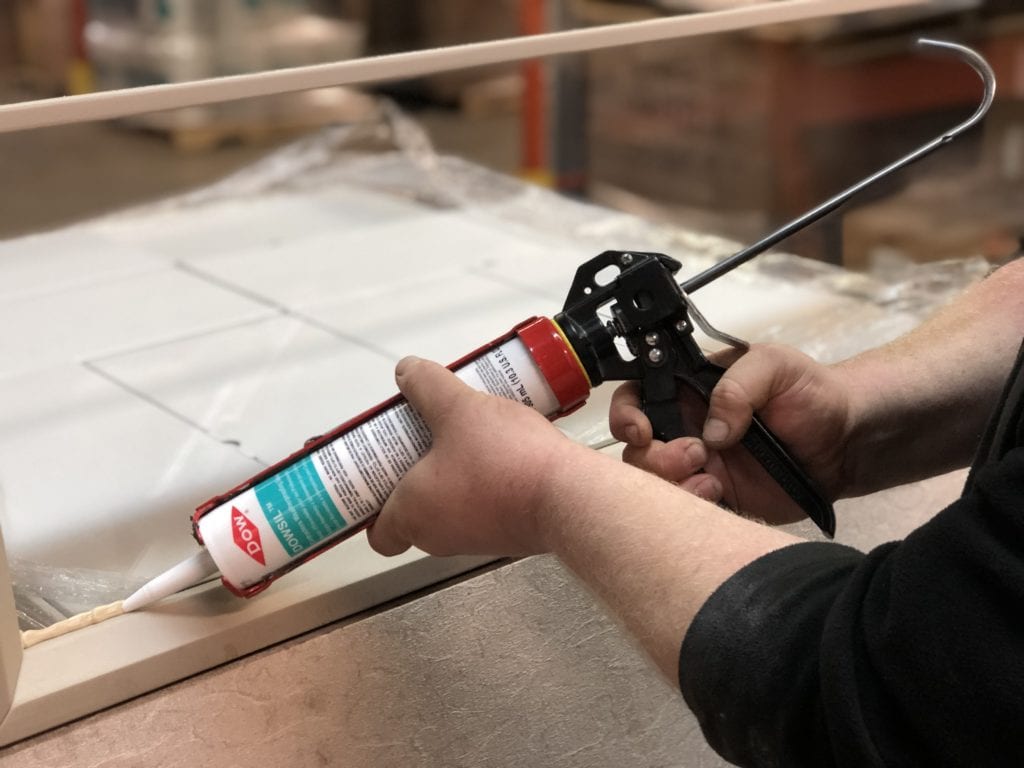
- They come in sausages or cartridges for caulk guns or in pails for larger applications.
- Mortars: Heavier, cementitious compounds mixed with water and poured or troweled into larger openings or for structural applications. They cure to a hard, rigid seal, primarily acting as a physical barrier that resists heat and flame passage. They provide both fire and smoke resistance.
- Wraps/Collars/Bags:
- Wraps/Strips: Flexible, intumescent materials wrapped around combustible pipes (e.g., PVC, CPVC, ABS) where they pass through fire-rated assemblies. When heated, they char and expand inward to crush and seal the melting pipe.
- Collars: Pre-formed intumescent devices that clamp around combustible pipes on one or both sides of the assembly. They function similarly to wraps but offer a quicker, pre-engineered solution.
- Bags/Pillows: Intumescent bags filled with granular material or mineral wool coated with intumescent material, typically used for temporary seals or in large openings with frequent changes (e.g., cable trays). They expand to fill the void when exposed to heat.
- Sealants/Caulks: These are compounds applied into annular spaces around penetrating items or into linear gaps. They form a robust seal and can operate through several mechanisms:
- Blocks/Bricks: Intumescent pre-formed blocks or bricks of intumescent material that are built up like a wall around penetrants in a large opening, similar functionality to bags/pillows but with a different form factor.
- Putties: Non-curing, pliable compounds that are easy to mold and apply around electrical boxes, cables, or small openings. They often intumesce to seal gaps.
- Boards/Devices (Ablative or Intumescent): Pre-fabricated panels or rigid devices designed for specific applications like large opening seals or for through-penetrations in electrical and data rooms.
- Ablative: These materials absorb heat at a controlled rate and erode (ablate) in a predictable way, forming a char that protects the substrate beneath and restricts fire spread.
- Some boards may also incorporate intumescent properties.
3. What does it mean for a firestop system to be “listed” or “UL/ULC Classified,” and why is this non-negotiable?
A “listed” or “UL/ULC Classified” firestop system means that it has been rigorously tested by a recognized independent third-party testing agency (like Underwriters Laboratories – UL, ULC (Underwriters Laboratory of Canada), Intertek/ETL, or FM Approvals) to meet specific fire resistance standards (e.g., CAN/ULC S115, ASTM E2307, ASTM E814/UL 1479 for through-penetrations, ASTM E1966/UL 2079 for linear joints).
This classification is absolutely non-negotiable because:
- Code Compliance: Building codes mandate the use of listed systems. Using unlisted products or unapproved assemblies is a direct code violation.
- Predictable Performance: Listing ensures the system will perform as expected in a fire scenario, providing the specified F-rating (fire resistance) and T-rating (temperature transmission through the penetration).
- Legal Liability: Contractors are legally responsible for installing firestop systems according to their listings. Deviations can result in severe liability in the event of a fire.
- Insurance Requirements: Code-compliant listed firestop installations are required by most insurance companies.
- Quality Assurance: It provides confidence that the product and assembly meet stringent quality and safety standards.
A listed system specifies all components, including the firestop material, the penetrating item, the construction of the fire-rated barrier, and the exact dimensions (annular space, joint width, material thickness). No deviations are allowed.
4. How do F-ratings and T-ratings differ, and why are both important for firestop systems?
F-ratings and T-ratings are crucial metrics assigned to listed firestop systems:
- F-Rating (Fire Rating): This measures the duration for which the firestop system prevents the passage of flame and hot gases through a penetration or joint. It indicates the integrity of the seal and its ability to resist direct fire exposure. An F-rating of 2 hours means the system prevented flame passage for at least 2 hours.
- T-Rating (Temperature Rating): This measures the duration for which the firestop system prevents the passage of heat through a penetration or joint. Specifically, it limits the temperature rise on the non-fire side of the assembly to no more than 325°F (180°C) above ambient. A low T-rating is critical to prevent spontaneous combustion of combustible materials on the non-fire side (e.g., wood studs, insulation, cable insulation). The most prominent requirement for a combined F and T Rating (FT Rating) is found in head-of-wall joints. These joints, which occur at the interface between a fire-rated wall and a fire-rated floor or roof assembly, are required by both the NBCC and OBC to be protected by a firestop system that has been tested and listed with both F and T ratings, ensuring not only flame containment but also the limitation of heat transfer.
- In addition to head-of-wall joints, the two other most common scenarios where FT Ratings are explicitly required include:
- Penetrations through firewalls, as defined under Article 3.1.10.1. of the NBCC and OBC — freestanding, structurally independent fire separations used to divide a building into two or more fire compartments. These walls must maintain their fire-resistance rating independently, and any service penetrations must be protected by a system tested to resist both flame and heat transmission.
- Penetrations through the main structural floor slab separating underground parking from the occupied portion of the building above. These penetrations are subject to strict provisions under Part 3 of the Code, particularly where they involve mixed-use occupancies or a change in major occupancy classification between storeys. Firestop systems in these scenarios must provide both F and T Ratings to maintain compartmentation and prevent the rapid transmission of heat into occupied levels.
Why both are important:
- An F-rating prevents the fire from directly spreading.
- A T-rating prevents the fire from igniting materials on the other side due to heat transfer.
- Codes often require both F and T ratings to match the fire-resistance rating of the assembly being penetrated. For example, a 2-hour fire-rated wall often requires a firestop system with both a 2-hour F-rating and a 2-hour T-rating. T-ratings are critical for penetrations involving combustible items (plastic pipes, electrical cables) or when a fire-sensitive area is on the non-fire side. Non-combustible pipes are equally critical as they are often metal, which is an excellent conductor, and can transfer heat from one room to another quite easily, which can cause combustible material on the other side of the partition to ignite spontaneously.
5. What are common pitfalls or mistakes in firestop installation that professional contractors must avoid?
Even experienced contractors can make costly firestop mistakes. Common pitfalls include:
- Deviating from Listed Systems: This is the most critical mistake. Using a different product, a different penetrating item, an incorrect annular space, or an unapproved wall/floor construction voids the listing. There’s no “close enough” in firestopping.
- Improper Surface Preparation: Failure to clean, prime, or prepare the substrate as per the listing can lead to adhesive failure.
- Incorrect Material Quantity: Using too little material (e.g., insufficient depth of sealant, too few wraps) will compromise the fire rating.
- Damaged or Improper Backer Materials: Using an incorrect type of backer material (e.g., wrong density mineral wool), or damaging it during installation, can affect the system’s performance.
- Inadequate Support for Penetrations: Heavy pipes or conduits not properly supported can stress the firestop seal and lead to cracks or gaps.
- Applying Firestop to Unrated Assemblies: Firestop systems are designed for rated assemblies. Applying them to non-rated walls doesn’t magically make the wall fire-rated.
- Lack of Documentation: Failing to properly document installations (photos, signed inspection tags, completion certificates) can lead to problems during inspections or in post-construction audits.
- Ignoring Dynamic Movement: For expansion joints or areas with significant movement, using a rigid firestop material instead of a flexible one designed for movement will lead to premature failure.
6. What documentation and quality control measures are essential for firestop installations?
Rigorous documentation and quality control are paramount for firestopping:
- Pre-Installation Planning:
- Review Drawings & Specifications: Identify all fire-rated assemblies and required firestop locations.
- Access Manufacturer Data: Obtain and review the specific UL/ULC/ETL/FM listing numbers, installation instructions, and Material Safety Data Sheets (MSDS/SDS) for all specified firestop products.
- Verify Approved Methods: Ensure the penetrations match the exact conditions of a listed system (e.g., pipe material, size, annular space, assembly type).
- During Installation:
- Dedicated, Trained Installers: Use personnel specifically trained and, ideally, certified in firestop installation.
- Strict Adherence to Listings: Install every firestop system precisely as per its UL/ULC/ETL/FM design details.
- Photo Documentation: Take clear, timestamped photos of installations before they’re covered up, showing the product, penetration, and surrounding assembly.
- Firestop Tags: Apply permanent, legible firestop tags to each firestopped penetration, indicating the design number, date, and installer.
- Post-Installation & Inspection:
- Third-Party Inspections: Engage third-party special inspectors (mandated in many jurisdictions) to verify compliance. While firestop manufacturers rigorously test and publish detailed solutions, it is important to recognize that they are also product suppliers with a commercial interest in the outcome of a project. As such, they do not qualify as independent third parties under building code requirements or industry best practices. To ensure objectivity, protect against liability, and maintain code compliance, inspections should always be conducted by a qualified and certified third-party agency that has no financial stake in the materials used or the outcome of the installation.
- Completion Certificates: Provide detailed documentation for the building owner and authorities having jurisdiction (AHJ), including product data sheets, listed design numbers, and installation logs.
- Punch List & Remediation: Promptly address any deficiencies identified during inspections.
Proper documentation proves that work was done correctly, protecting the contractor and the building owner, and is essential for gaining occupancy permits.
- Pre-Installation Planning: