Concrete Restoration: Contractor’s FAQ

0

Repair addresses a localized defect such as a crack, spall, or delamination.

Restoration is a system-based process that identifies the mechanisms causing deterioration, repairs affected areas, and implements protective measures to slow or stop future damage. Restoration is intended to extend service life, not simply restore appearance.

Repair vs. Restoration (Quick Reference)

Concrete repair addresses localized defects.
Concrete restoration is a system-based approach focused on service life extension, not cosmetic improvement.

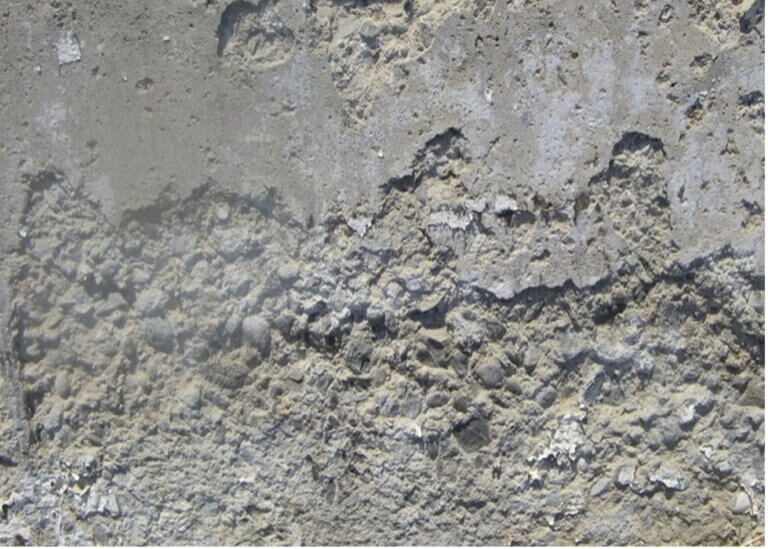
Concrete spalling is a common symptom of deterioration, where surface concrete breaks away due to corrosion, freeze–thaw damage, or internal distress.

Concrete deterioration typically results from one or more of the following mechanisms:

  • Reinforcing steel corrosion due to chloride ingress (road salts, marine exposure) or carbonation
  • Water ingress through cracks, failed joints, or deteriorated waterproofing systems
  • Freeze–thaw damage in saturated concrete with inadequate air entrainment
  • Alkali–silica reaction (ASR), causing internal expansion and cracking
  • Construction deficiencies such as inadequate cover, poor consolidation, or improper curing
  • Chemical attack from de-icing salts, acids, or industrial contaminants
  • Structural movement or overloading leading to cracking and spalling

A condition survey is used to confirm which deterioration mechanisms are active and to determine severity. This typically includes:

  • Visual inspection for cracking, spalling, rust staining, and efflorescence
  • Sounding or hammer testing to locate delaminations
  • Corrosion potential testing or half-cell mapping
  • Core sampling and laboratory analysis (chlorides, carbonation depth, strength)

The purpose of testing is not simply to document damage, but to identify the underlying cause so the repair strategy addresses the problem rather than the symptom.

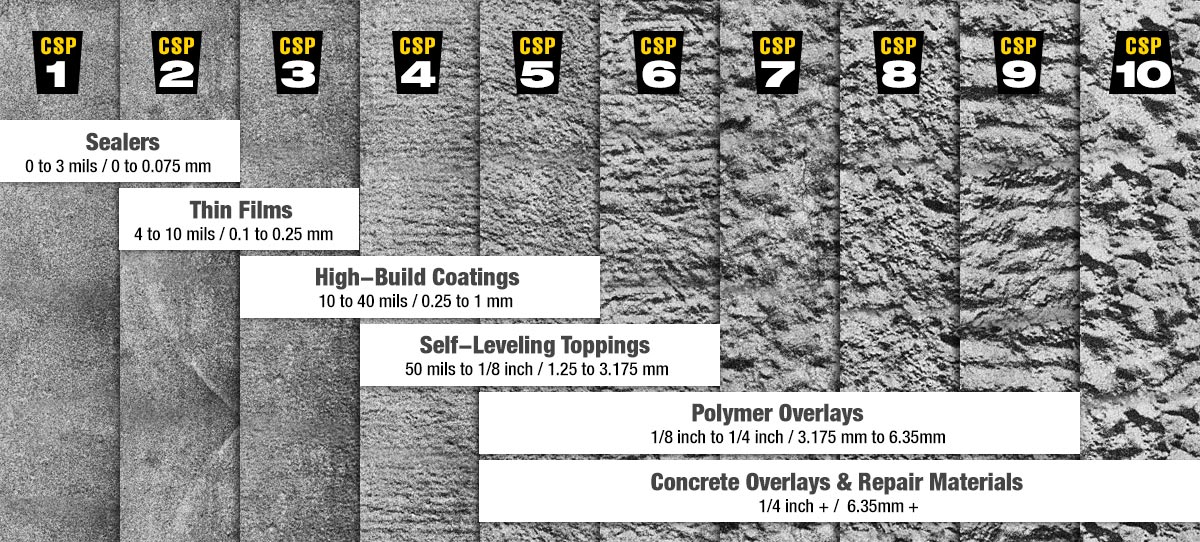
All unsound or contaminated concrete must be removed to expose sound substrate. Surfaces should be prepared to the specified ICRI Concrete Surface Profile (CSP), typically CSP 5–9 for bonded repairs.

Reinforcing steel must be exposed where corrosion is present, and all bond-inhibiting materials — including curing compounds, coatings, adhesives, and membrane residues — must be removed.

Most cement-based repair mortars require a saturated surface-dry (SSD) substrate at placement. Surface preparation requirements vary by product and must always follow the manufacturer’s technical data sheet.


Compatibility Does Not Mean Adhesion
Material compatibility does not guarantee adhesion. Bond depends on surface preparation, cleanliness, moisture condition, and correct material selection.

Concrete surface preparation is defined by the ICRI Concrete Surface Profile (CSP), which ranges from smooth to very rough depending on the repair system.
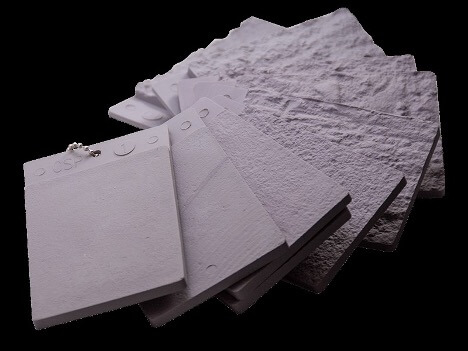
ICRI Concrete Surface Profile (CSP) reference chips used to visually compare prepared concrete surfaces to the specified surface roughness.

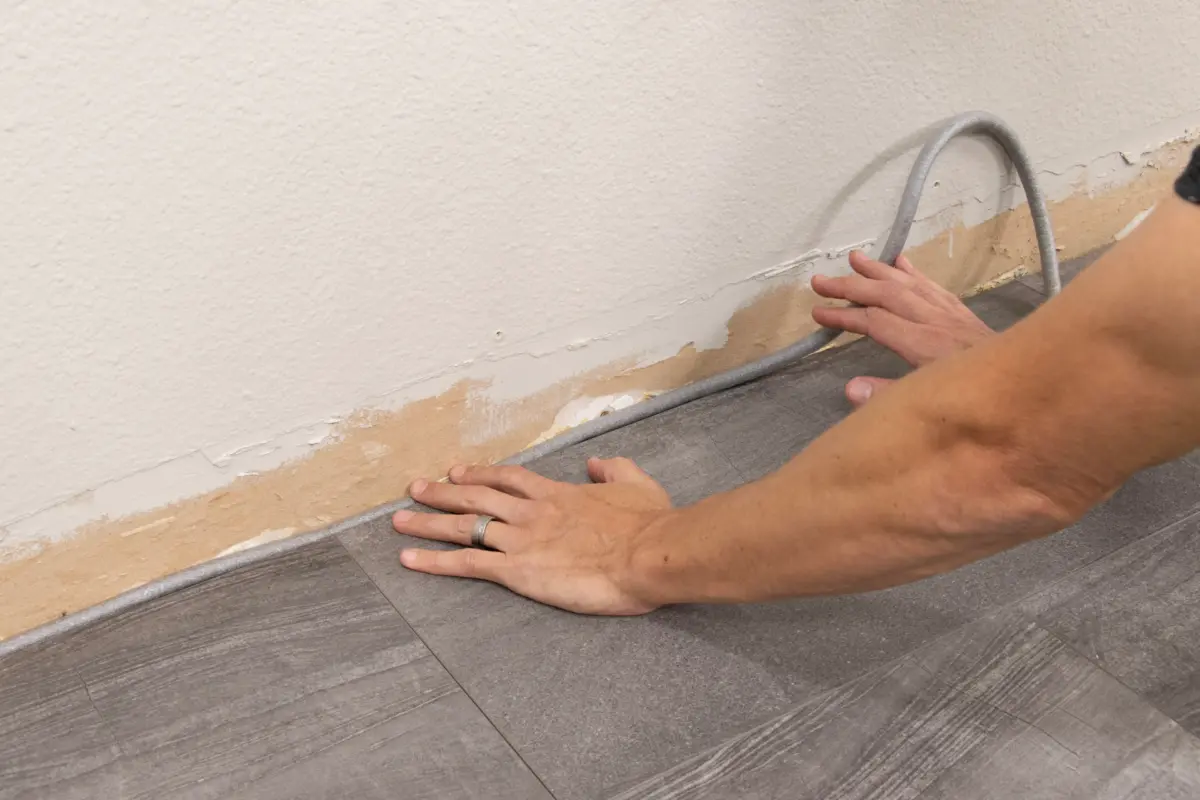
Corroded reinforcing steel must be cleaned to bright metal. Where section loss exceeds allowable limits, supplemental reinforcement or splicing must be designed by the structural engineer.

Repair boundaries should extend beyond visibly damaged concrete to reach low-chloride, uncarbonated concrete. Corrosion mitigation measures — such as protective primers, inhibitors, or galvanic anodes — should be considered to reduce future corrosion adjacent to the repair.

  • Epoxy injection is used for structural repair of dry, non-moving cracks where restoring load transfer is required. It is rigid and unsuitable for cracks subject to movement or moisture.
  • Polyurethane injection is used to seal leaking or moving cracks. It remains flexible and is intended for waterproofing rather than structural repair. Polyurethane injection of cracks is sometimes referred to as “waterstop”.
  • Polymer-modified cementitious repair mortars:Cement-based repair materials enhanced with polymer modifiers, either dry-blended into the powder or added as a liquid latex. These are the industry standard for modern concrete restoration, offering improved bond strength, reduced shrinkage, and enhanced freeze–thaw durability. They are used for most structural, vertical, overhead, and general repair applications.
  • Epoxy-based repair mortars:Resin-based systems providing very high bond strength and chemical resistance. Because they are rigid and moisture-sensitive, their use is typically limited to specialized applications where movement is minimal.
    Vertical and overhead repairs require non-sag, thixotropic formulations designed to stay in place during placement.
Terminology Clarification

In modern concrete restoration, most professional repair mortars commonly described as “cementitious” are actually polymer-modified cementitious repair mortars. Plain cement-only patch materials are generally unsuitable for durable structural repairs in most applications. Polymer modification may be supplied as a dry-blended powder or as a liquid latex added during mixing.

Most polymer-modified cementitious repair mortars are placed in lifts of 25–50 mm (1–2 inches). Some products allow thicker placements, while larger or deeper repairs may require multiple lifts or form-and-pour methods.

Lift thickness limits must always follow the manufacturer’s technical data.

Repairs must be protected from rapid drying, wind, direct sunlight, and freezing. Moist curing or curing blankets are commonly required for 3–7 days, depending on the material.

If coatings, membranes, or sealers are planned, curing methods must be compatible with subsequent materials. Some curing compounds can interfere with adhesion and should only be used where permitted.

Yes. Cracks and repairs must be completed, cured, and meet moisture and surface-condition requirements before coatings or membranes are applied.

Moisture content of concrete or mortar repairs must meet the maximum limits stated in the coating manufacturer’s technical data sheet and may vary from product to product so ensure that you have verified these requirements before commencing.

Most coatings are not designed to bridge structural cracks unless explicitly formulated to do so.

Service life is extended by:

  • Installing appropriate protective coatings or waterproofing systems
  • Maintaining and replacing failed joints and sealants
  • Controlling water infiltration and drainage
  • Implementing corrosion-mitigation strategies in chloride-exposed environments
  • Performing routine inspections and maintenance

Joint and waterproofing failures are among the most common causes of premature repair deterioration.

ICRI – Surface preparation and quality control
ACI 562 – Assessment and rehabilitation of existing concrete structures
CSA S448.1 – Repair of reinforced concrete structures (Canada)
EN 1504 – Products and systems for concrete repair
ASTM standards covering surface preparation, bond strength, durability, and material performance.
Project specifications and manufacturer technical data always take precedence.

Testing vs. Design Standards
Restoration work is governed by both design codes (such as ACI 562 and CSA S448.1) and material test standards (such as ASTM). Design codes establish repair principles and responsibilities, while ASTM standards define how surface preparation, bond strength, durability, and material performance are measured and verified.

Common causes include:

  • Incomplete removal of deteriorated or contaminated concrete
  • Poor surface preparation or inadequate bond
  • Use of materials incompatible with exposure conditions or movement
  • Trapped moisture beneath coatings or membranes
  • Ongoing corrosion not addressed during repair
  • Common Misconception

Concrete repairs often fail not because the repair material was defective, but because the underlying cause of deterioration was not addressed. Patch repairs placed over active corrosion, ongoing water intrusion, or structural movement typically deteriorate again within a few years.

Why Many Concrete Repairs Fail
Most failures result from unaddressed causes such as corrosion, water ingress, or movement — not defective materials.


CS2 helps clients identify the root cause of concrete deterioration—not just the visible damage. Understanding whether the issue is driven by moisture ingress, corrosion, freeze–thaw cycling, movement, or material incompatibility is critical to selecting a repair that will last.
Based on this assessment, we help guide repair strategies that address both the immediate repair and the underlying cause, reducing the risk of premature failure or recurring damage. This includes product selection, surface preparation guidance, and compatibility considerations with existing substrates and systems.
We work closely with our restoration partner Sika, a global construction-chemicals manufacturer offering complete systems for concrete repair, protection, and durability enhancement. Sika is one of the most specified construction chemical brands in North America, with products proven in demanding Canadian climates and supported by extensive technical documentation and field experien

CS2 Involvement
CS2 adds the most value when deterioration mechanisms are unclear, previous repairs have failed, multiple systems interact, or long-term durability is critical. Clients rely on CS2 to help coordinate proven repair strategies by combining our practical restoration experience with the technical resources of our manufacturing partners, including their engineering and technical support teams.


Leave a Reply

Your email address will not be published. Required fields are marked *